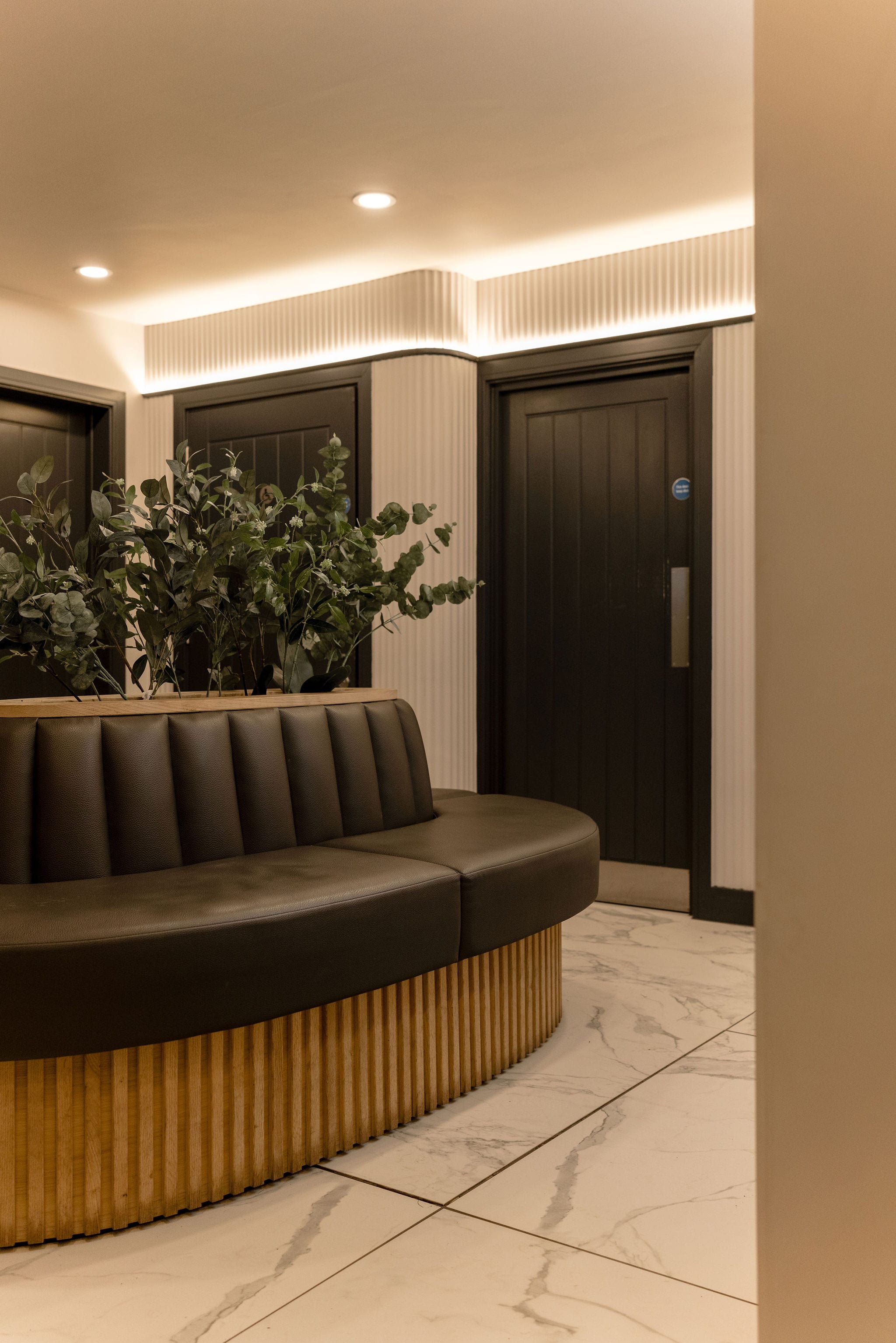
Enhancing Dwell Time and Spending Through Effective Commercial Interior Design
Starbucks burst onto the scene in the 1970s, offering an update on the coffee shop template. After successfully running a coffee shop in Seattle, USA, the company set their sights on expansion.
They invented a new form of coffee shop usage, now known as “coffee camping”. Customers wanted a place to be able to sit, relax, catch up with friends, read a book or even work. It’s a location between work and home we refer to as the “third space”.
By offering a comfortable space, they could justify a heavy markup on their coffee prices. This was no longer a place to buy a humble cup of coffee; it was a whole experience with distinct decor and a soundtrack to match. The concept was so successful that there are now over 38,000 Starbucks locations in 80 countries around the world. Starbucks is one example of successful
It’s odd to think about Starbucks creating something that is now so recognisable and commonplace in our culture. But it’s an important aspect of interior design that is often overlooked.
You can create a place that people want to visit, but how do you make them want to sit and stay a while? When customers feel comfortable enough to dwell in a venue, you’ll find that their average spend increases.
We see this in hotels, where there is a lot of additional revenue to be made in the hotel bar and restaurant. But only if you can convince visitors that this is more desirable than being in their room.
It can mean the difference between the guest enjoying a three-course meal with wine in the hotel restaurant versus a single bottle of wine ordered to their hotel room. During the day, guests have a choice between enjoying a coffee and pastry in the hotel lobby or heading to a nearby competitor.
What is dwell time?
Dwell time or dwell rate is a term used in interior design to describe the time customers spend in designed spaces. Hotels and hospitality venues are particularly concerned with the dwell rate.
It’s vital to strike a balance between creating a space where people feel welcome to sit, relax and enjoy their time, while also recognising that it is a commercial space and they are expected to spend money while they are there.
Many coffee shops struggle despite seemingly being very crowded during the day. This is because they create an atmosphere where workers feel welcome to purchase a single drink and then occupy a table all day long. Design should be comforting and welcoming, but it should also be clearly a commercial space.
How does dwell rate impact revenue?
A hotel I recently stayed in would be the perfect example of a missed opportunity in design. The hotel was built in the 1800s and had a stunning exterior, but a recent interior refurbishment created a disjunction between the original features and the new design.
Despite being a high-end hotel, nothing about the interior invited me to stick around longer than I needed to. Clashing wallpaper was paired with piercing and stark lighting that cheapened the interior. The seating also looked cheap and was incredibly uncomfortable. As I looked around the lobby, I couldn’t find a reason to stick around and instead sought refuge in my hotel room.
Source: Black Ivy Design news archive.