The Psychology of Restaurant Interiors: How Design Influences Dining
Have you ever wondered why your favourite fast food joint doesn’t invite you to linger too long, while a fine dining restaurant encourages you to get comfortable? It’s not only about matching expectations; there are also clear psychological tricks at play to help encourage the kind of behaviour these different styles of establishment are looking for in their customers.
The original McDonalds dining concept featured functional booths in bright shades of red and yellow. Red was chosen to help stimulate appetite, while yellow is a bright beacon that calls out to younger diners. The utilitarian concept reminds you that it was clean when you arrived, so why not clear your table on the way out?
Contrast this with an establishment like Sketch in Mayfair. Plush seating in mellow yellow shades encourage diners to sink down and get comfortable. The longer they stay, the better, as they’ll be running up a larger and larger tab.
You’d be forgiven for thinking that restaurant design choices are purely aesthetic. While visual harmony and interest is clearly a priority, there is more going on behind the scenes. And this all depends on whether the restaurant wants you to eat and drink more, or clear your table quickly and make room for the next guests.
Here are just some of the ways that psychology influences dining design to help encourage positive behaviour.
Narrative
Every restaurant should have a narrative that runs through the design and the menu. When the decor is at odds with the F&B offering, diners are left feeling off-kilter. Thematically, there needs to be something that binds the decor with the menu.
Take Bacchanalia in London. Diners are surrounded by OTT frescos, marble statues float overhead and images of cherubs adorn the menu. This opulent setting sets the scene for the Mediterranean-inspired menu. It’s not about matching gastronomy to gimmicks, but rather about creating a narrative that makes diners feel like they are part of a story.
Texture
Texture plays a huge role in dining psychology. Rustic dining pairs well with soft, washed linen, while luxury dining calls for sumptuous fabrics. In Japanese restaurants, we have an expectation of clean lines and dark wood.
Ave Mario in Covent Garden achieves the balance of texture beautifully with their riotous blend of red, white and gold. Their plushy red velvet booths invite you to get close to your fellow diners for an intimate dining experience.
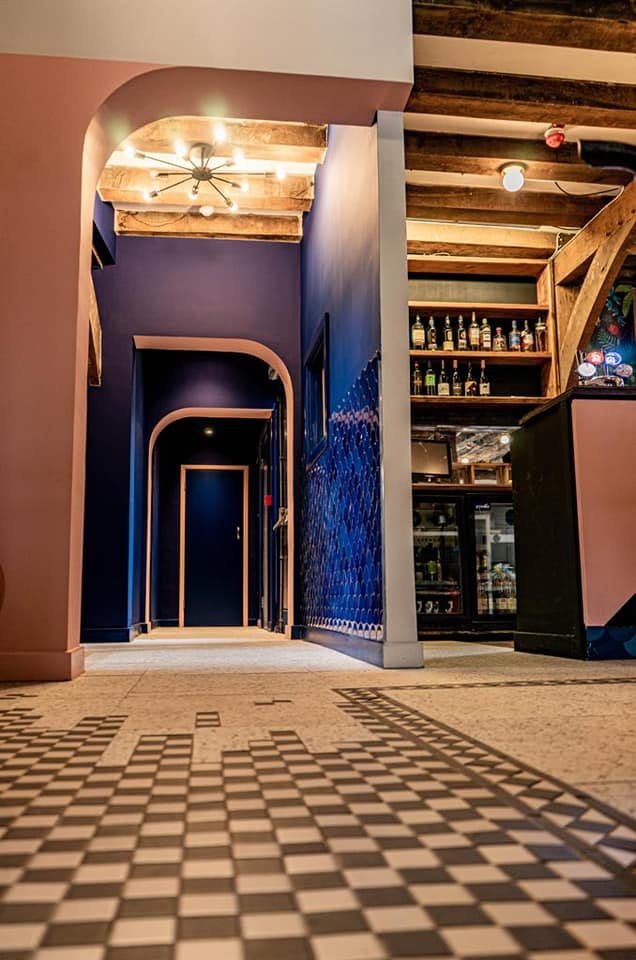
Another great example of this would be The Green Dragon. In this space, we paired rich velvet fabrics in playful tones to create contrast with the exposed beams and original 15th Century architecture.
The Green Dragon Restaurant. Designed by Black Ivy Design – your specialist in bar and restaurant interior design
Comfort
Source: Black Ivy Design news archive.